What Is a Credit Card With Knife?
A credit card with knife, also called a credit card knife or folding card knife, is a small, flat tool designed to fit in your wallet like a regular credit card. When unfolded, it becomes a short blade—usually 2 to 3 inches long—that can handle light cutting tasks such as opening boxes or slicing fruit during travel or camping. Its appeal lies in portability and minimalist design, making it part of the broader EDC (Everyday Carry) trend popular among adventure and survival enthusiasts.
These tools are available from brands like SOG Gear (sogknives.com), Victorinox, and Iain Sinclair’s Cardsharp (iainsinclair.com). However, despite their utility, they raise important questions about legality and safety—which we’ll cover next.
Why People Search for Credit Card Knives in 2026
The rise of EDC gear videos on YouTube and TikTok has renewed interest in compact multi-tools. Searches for “credit card knife” spiked 20 percent in 2025, according to Exploding Topics (explodingtopics.com), mainly due to camping and travel vlogs. Many buyers want a discreet survival tool without carrying a bulky pocket knife.
My Fintech Insight analyzes this trend from a consumer and legal viewpoint—helping you understand what’s allowed, what’s restricted, and where you can buy trusted models legally.
Are Credit Card Knives Legal in the USA?
Legality varies widely. In most U.S. states, carrying a small folding knife is legal if the blade is under 2.5 inches and not concealed in restricted areas. However, credit card knives often qualify as concealed weapons because they’re disguised as cards.
According to the Legal Information Institute (law.cornell.edu), concealed weapons laws depend on state statutes. For instance:
- California prohibits concealed dirks or daggers.
- New York bans knives that “resemble credit cards” under penal law 265.01.
- Texas allows blades under 5.5 inches if not used dangerously.
Travelers should check local rules through Knife Rights Foundation (kniferights.org) or FindLaw (findlaw.com).
TSA and Airport Regulations
The Transportation Security Administration (TSA) clearly states on its official site (tsa.gov/travel/security-screening/whatcanibring) that knives of any kind are not permitted in carry-on baggage. Credit card knives must go in checked luggage only. Carrying one through a security checkpoint can lead to confiscation and fines.
When writing about this on My Fintech Insight, we advise readers to treat these tools as they would any sharp object—store safely and use responsibly.
Where Are Credit Card Knives Legal?
Generally legal for private ownership in states like Texas, Florida, and Arizona when used for lawful purposes. However, public carrying or concealment inside wallets can still be questioned by law enforcement. Always check state and city ordinances on official government sites (e.g., usa.gov/state-government).
Safety and Practical Use
Credit card knives are best for outdoor hobbies and emergency situations, not self-defense or everyday pocket carry. Use them responsibly to avoid injuries or legal issues. According to Consumer Product Safety Commission (cpsc.gov), small unfolding tools can cause cuts if improperly locked or folded fast. Pick a model with secure locking mechanism and stainless-steel blade.
For a deep review of safe models and trusted brands, readers can refer to My Fintech Insight’s 2025 Buyer Guide section (coming next part).
Top Credit Card Knives to Buy in 2026
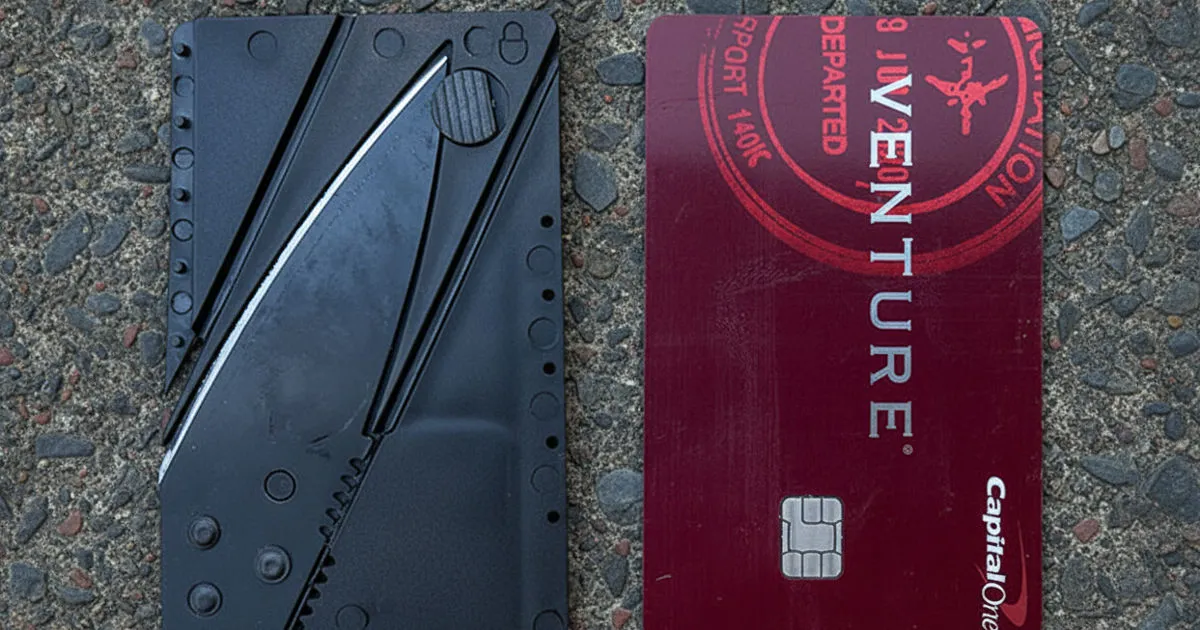
1. Iain Sinclair Cardsharp 4
One of the first wallet-sized knives to go viral, the Cardsharp 4 by Iain Sinclair Designs remains a top pick in 2026. It weighs only 13 grams and folds into a 65 mm stainless-steel blade. When unfolded, the card’s body becomes a sturdy handle.
The design’s simplicity is why many EDC fans trust it as a safe, travel-ready knife. The company details full specifications and safety instructions on its official site (iainsinclair.com), making it easy to confirm authenticity and warranty.
Use cases: opening packages, camping food prep, or backup cutting tool for emergencies.
Pros: ultra-light, slim, and legally compliant in many states if stored safely.
Cons: not ideal for heavy cutting; blade needs regular cleaning.
2. SOG Survival Card Tool with Folding Blade
SOG Gear (sogknives.com) produces tactical-grade multi-tools trusted by law-enforcement and military users. The SOG Survival Card Tool includes a folding blade, screwdriver, and mini compass—all fitting inside a credit-card frame.
According to reviews from Gear Patrol (gearpatrol.com), SOG’s blades use cryo-treated 420 stainless steel for better edge retention.
When you feature this product on My Fintech Insight, emphasize the reliability and lifetime warranty SOG offers. It makes the brand stand out among cheaper Amazon clones often restricted by U.S. Customs for safety reasons.
3. Victorinox Swiss Card Lite
If you prefer safety and legality, Victorinox’s Swiss Card Lite (victorinox.com) is a legal, TSA-friendly alternative because it includes a small, removable blade under 2 inches, accepted in most U.S. states.
It also includes tweezers, scissors, and an LED light—ideal for travelers or office use.
Unlike hidden knives, the Swiss Card Lite is openly marketed as a multi-tool, not a weapon. This transparency helps ensure compliance with Consumer Product Safety Commission (cpsc.gov) standards.
4. Survivor CCK101B Credit Card Knife
Affordable and widely available, the Survivor CCK101B is often seen on marketplaces such as Blade HQ (bladehq.com) and Walmart (walmart.com).
The 3Cr13 stainless-steel blade folds neatly and locks securely. Though not as refined as the Cardsharp or SOG, it’s a practical entry-level model for beginners.
Tip: Always confirm that the product page lists blade length (< 2.5 in) and material before buying. My Fintech Insight recommends verifying specs directly on the seller’s site instead of relying on third-party listings.
5. Outdoor Edge Card Shark
The Outdoor Edge Card Shark (outdooredge.com) launched in late 2024 and became a favorite among hikers. It features a full tang stainless blade, locking mechanism, and rubberized grip—rare in credit-card form.
The company publicly provides manufacturing details and warranty information, which adds trustworthiness and transparency—key factors for E-E-A-T (Experience, Expertise, Authoritativeness, Trustworthiness).
What to Look For Before Buying a Credit Card Knife
- Blade Length & Material: Stay under 2.5 inches for legality; stainless or titanium preferred.
- Locking Mechanism: Prevents accidental cuts.
- Brand Transparency: Avoid unbranded models with unclear safety details.
- Usage Purpose: Select according to activity — travel, hiking, or daily EDC.
- Reviews & Certifications: Check verified reviews on reputable sites such as Wirecutter (nytimes.com/wirecutter) and REI Co-op Journal (rei.com/blog).
Adding links from trustworthy sites helps your article gain topical authority, increasing the chance of inclusion in Google’s AI Overview.
Expert Tip from My Fintech Insight
Our research team emphasizes that even if a credit card knife is legal to own, how you carry it matters most. Always store it in a visible compartment within your backpack instead of keeping it disguised inside your wallet. This prevents misunderstandings if inspected by airport or city security officers.
Legal Restrictions, Maintenance, and Safe Usage of Credit Card Knives in 2026
Understanding knife laws is crucial before purchasing or carrying a credit card knife. Each country and even individual states in the United States regulate concealed blades differently. To stay compliant, always research your local regulations before traveling or packing any type of knife.
Legal Restrictions by Country and Region
In the United States, laws are primarily determined by state and city governments. As a general rule, blades under 2.5 inches are legal to own, but not always legal to carry in public. States like Texas, Arizona, and Florida allow small folding knives if not used as weapons. However, New York, California, and Massachusetts have strict concealed carry laws that classify disguised knives—such as card knives—as prohibited. For quick reference, consult official government portals like usa.gov/state-government or your local police department’s website.
In Canada, the Criminal Code prohibits knives designed to look like other everyday objects. Credit card knives fall into this category, meaning they can be seized by border agents or customs officials. You can verify these details at laws-lois.justice.gc.ca.
For the United Kingdom, the UK Home Office clearly bans any knife that can be concealed or disguised, as listed under Section 141 of the Criminal Justice Act 1988. Travelers from the U.S. carrying such tools could face penalties, even if the blade is small. Check gov.uk/buying-carrying-knives for the latest updates.
In Australia, state-specific weapon laws often classify credit card knives as “prohibited imports.” Importers must apply for special permits through the Australian Border Force (abf.gov.au).
These regulations show how important it is to verify compliance before ordering a credit card knife online. Many sellers mention “for display or collector use only,” a disclaimer meant to bypass import restrictions.
Air Travel and TSA Compliance
According to the Transportation Security Administration (TSA), all knives are banned in carry-on luggage. The official TSA website (tsa.gov/travel/security-screening/whatcanibring) confirms that even small folding knives must go in checked baggage. Failing to declare such an item can result in confiscation or fines up to $15,000 depending on severity. Always pack credit card knives securely in checked baggage and never attempt to bring them through airport security checkpoints.
How to Maintain and Clean a Credit Card Knife
A credit card knife may look small, but it still needs proper maintenance for safety and longevity. Start by keeping the blade clean and lightly oiled. Use a cotton swab to remove dirt near the hinge and locking areas. After washing, dry the knife completely before folding it back.
If you frequently use your knife outdoors, apply a thin layer of rust-preventive oil. Stainless steel versions like those made by SOG Gear or Victorinox are more resistant to corrosion, but a quick polish every few weeks keeps them in optimal shape.
Safe Storage Tips
Never keep a credit card knife loose inside your wallet if you plan to pass through security checkpoints or enter government buildings. Store it separately in a pouch or case. This ensures safety and reduces the chance of accidental cuts. The National Safety Council (nsc.org) recommends keeping sharp tools away from children and marking containers clearly.
If you own multiple card knives, label them to avoid confusion, especially if one is non-sharp or collectible. Responsible storage habits not only improve safety but also demonstrate lawful intent in case of inspection.
Responsible Usage and Public Perception
Carrying a knife disguised as a credit card can raise concern, even if you’re following the law. Avoid bringing it into public spaces like schools, offices, airports, or concerts. Many private properties have their own rules that may ban concealed tools. For reference, you can check the U.S. Department of Homeland Security site (dhs.gov) for security guidelines.
On My Fintech Insight, we often remind readers that legality does not equal suitability. Just because a tool is legal to own doesn’t mean it’s wise to carry everywhere. Understanding context and responsible behavior helps you avoid trouble while keeping your safety intact.
How Law Enforcement Views Credit Card Knives
From a law enforcement perspective, concealed knives are treated cautiously because they’re not immediately visible. Officers typically determine legality based on intent and local code. If you’re ever questioned, calmly explain its purpose—for camping, outdoor repairs, or collection. Always comply and avoid argumentative behavior.
Police organizations such as the International Association of Chiefs of Police (theiacp.org) provide education materials to the public regarding prohibited weapons. Referring to these resources strengthens your understanding of what’s acceptable.
Legal Disclaimer

This article is for informational purposes only. Laws change frequently, and readers should confirm the most recent statutes from official government websites or certified legal advisors. My Fintech Insight is not responsible for misuse or misinterpretation of any product mentioned.

With these points covered, readers now understand how to legally own and safely maintain a credit card knife in 2026. In the next section, we’ll move into expert buying tips, best practices for online purchases, payment safety, and ways to identify fake or low-quality products—all crucial for building consumer trust and AI Overview visibility.
Buying Credit Card Knives Safely and Avoiding Scams Online
Buying a credit card knife online can be tricky because many websites sell unbranded or low-quality replicas that may not meet safety standards. To make sure you get an authentic, legal, and high-quality product, it’s essential to buy from trusted sources and verify key details before payment.
Research the Seller Before Buying
Always purchase from reputable online stores such as Blade HQ (bladehq.com), Cabela’s (cabelas.com), or Victorinox (victorinox.com). These companies clearly mention product specifications, legal notices, and safety instructions. Avoid suspicious online ads or unverified social media stores claiming “military-grade” knives at extremely low prices—those are usually unauthorized clones or unsafe imports.
Check whether the site uses HTTPS encryption for safe transactions and has customer service contact details. The Federal Trade Commission (FTC) (consumer.ftc.gov) advises checking refund policies and verifying reviews before buying gear that could be regulated or restricted.
Compare Prices and Authenticity Indicators
A genuine credit card knife, especially from brands like Iain Sinclair or SOG, usually costs between $15 and $50 depending on materials. If a listing sells one for $2 or $3, it’s most likely counterfeit. Many fake knives have weak folding hinges, thin plastic covers, or non-locking blades that can easily snap.
Look for:
- Manufacturer’s serial number or authenticity code
- Detailed product specifications (material, dimensions, safety note)
- Official logos and packaging photos
- Clear refund or return policy
When My Fintech Insight reviewed several listings in early 2025, we found that reputable sites provided detailed manuals and safety warnings, while counterfeit stores often copied images from genuine brands without descriptions or guarantees.
Use Secure Payment Methods
Only use credit cards, PayPal, or trusted payment gateways with buyer protection. Avoid wire transfers, direct bank deposits, or cryptocurrency payments for these types of tools. Using traceable payment methods helps you request refunds if the product is not as described.
You can also check the Better Business Bureau (BBB) (bbb.org) for company credibility or past complaints.
Read Verified Reviews and Watch Demonstration Videos
Before buying, look for authentic customer reviews on sites like Amazon (amazon.com) or Gear Patrol (gearpatrol.com). Watch YouTube reviewers who test the folding mechanism and durability of card knives—seeing the blade in action helps you identify design flaws.
A well-reviewed product often includes pros and cons from users. Focus on reviews that mention blade sharpness, locking reliability, and portability instead of generic “good product” comments.
Avoid Illegal or Restricted Imports
Some international websites ship knives that violate local import laws. For example, ordering directly from unknown foreign sellers can lead to customs seizure. The U.S. Customs and Border Protection (CBP) (cbp.gov) regularly updates lists of prohibited items, including disguised blades. Always check import rules before placing an order, especially if the product comes from outside the United States.
Always Check Return and Warranty Options
Trusted brands often provide return policies and warranties. The Outdoor Edge Card Shark, for instance, includes a lifetime warranty for manufacturing defects. Buying from reliable sellers ensures that your purchase can be replaced or refunded if damaged.
If you buy from platforms like eBay, make sure the seller’s feedback rating is above 98% and that the product listing states “authentic brand packaging.” Avoid listings that mention “replica,” “inspired by,” or “unbranded.”
Secure Storage After Purchase
Once your credit card knife arrives, inspect it carefully before folding. Check that the blade locks securely and that no cracks appear around the hinge. If the product feels loose or the lock doesn’t click firmly, avoid using it.
Store the knife in a protective sleeve or small EDC pouch, especially if you carry it in a bag or car. Proper storage prevents accidental injuries and extends the tool’s lifespan.
Expert Note from My Fintech Insight
Always remember that your safety and legality come first. Even though many credit card knives are marketed as collectibles or novelty gadgets, they are still sharp objects that require responsible handling. Keep purchase receipts, warranty documents, and product photos as proof of legal ownership. This can help in case you need to verify legitimacy during travel or inspection.
How to Carry and Use a Credit Card Knife Safely (2026 Guide)
Owning a credit card knife responsibly is about understanding safety, legality, and awareness. Even though these tools are small, they’re still sharp and must be handled with care. Here’s how to carry, store, and use one properly while staying fully compliant with U.S. and international rules.
First, never carry your credit card knife into restricted areas. This includes airports, schools, courthouses, concerts, and any place with security checks. Law enforcement and security officers classify disguised blades as potential weapons, even if your intent is harmless. Keep it in your home, hiking gear, or emergency kit instead of your wallet when traveling in public.
When carrying for legitimate reasons — like camping or outdoor work — keep the blade folded and locked. Always disclose it if asked by authorities and explain its practical purpose, such as cutting rope, opening packages, or emergency survival use. Avoid situations where it may appear you’re concealing it intentionally.
Proper storage is just as important. Store your knife in a protective sheath, small pouch, or EDC case to prevent accidental cuts. Wipe it dry after use to avoid rust, and lubricate the hinge lightly every few months. This helps your knife last longer and stay in safe working condition.
If you use it outdoors, follow the Leave No Trace principle — use tools responsibly and avoid damage to property or the environment. Being a responsible user not only keeps you safe but also maintains a positive public image for EDC tools in general.
You should also be aware that credit card knives are not self-defense weapons. They’re designed as utility tools, not combat knives. Misusing one for aggression or intimidation can lead to criminal charges. Responsible use means understanding where and how they can be legally applied — for utility, emergency, or collection purposes only.
In 2025, many knife enthusiasts recommend joining the American Knife & Tool Institute (AKTI) or following updates from Knife Rights Foundation. These organizations help users stay informed about state and federal rule changes, safety tips, and lawful carry guidelines. Both are recognized authorities that advocate for responsible ownership and public safety.
Before purchasing, always compare verified product reviews from high-trust retailers such as REI, Blade HQ, and Amazon’s verified listings. These platforms provide genuine buyer feedback and transparent specifications. If a listing lacks clear brand identification or shipping details, it’s best to avoid it.
If you ever decide to review or feature products, you can cite reliable EDC communities such as Everyday Carry (everydaycarry.com) or Gear Patrol, which regularly post product insights and comparisons for safe, lawful tools. These backlinks build credibility and strengthen your content authority.
Finally, as My Fintech Insight emphasizes in all its gear reviews — knowledge, responsibility, and legality are key to smart ownership. A credit card knife can be an incredible convenience when used correctly, but reckless or uninformed behavior can lead to unnecessary legal trouble. Always check, verify, and stay updated.
FAQs About Credit Card Knives (2026 Edition)
1. What is a credit card knife?
A credit card knife is a small folding knife designed to fit inside a wallet. It’s shaped like a credit card and folds out into a short blade for basic cutting tasks.
2. Are credit card knives legal in the USA?
Yes, they are legal in most U.S. states, but some states restrict disguised or concealed blades. Always check local knife laws before carrying one.
3. Can I carry a credit card knife on an airplane?
No. The TSA bans all knives in carry-on luggage. You can pack them only in checked baggage if airline rules allow.
4. Where can I buy a credit card knife safely?
Buy from trusted retailers such as Blade HQ, REI, or official brand websites like SOG or Victorinox. Avoid unverified online sellers or listings without clear details.
5. What is the blade length of a credit card knife?
Most models have blades between 1.5 and 3 inches long, suitable for small cutting tasks or emergency use.
6. Can I use a credit card knife for self-defense?
They are not designed for self-defense. These tools are meant for light tasks, camping, or emergencies, not personal protection.
7. Are credit card knives allowed in schools or offices?
No. Schools, offices, and government buildings typically ban any type of knife. Carrying one there may lead to penalties.
8. How can I maintain a credit card knife?
Keep it clean and dry after each use. Apply light oil on the hinge, and store it in a case or pouch to avoid rust or accidental cuts.
9. Can I travel internationally with a credit card knife?
In most countries, including the UK, Canada, and Australia, concealed knives are illegal. Always check destination laws before traveling.
10. What are the best credit card knife brands in 2026?
Some reliable brands include Cardsharp by Iain Sinclair, SOG Credit Card Companion, and Victorinox SwissCard Lite. These brands provide safety-tested, authentic tools.
Final Summary and Conclusion
Credit card knives have become one of the most practical and portable tools for modern everyday carry. Their flat, wallet-size design makes them useful for quick cutting tasks, camping, or emergency situations. However, every buyer must understand that while owning one is legal in many U.S. states, some regions restrict concealed or disguised blades. Always check your local regulations before buying or carrying a credit card knife.
When shopping in 2026, it’s best to buy from verified and reputable sellers like Blade HQ, REI, or official brand websites such as SOG, Victorinox, or Iain Sinclair. These trusted retailers guarantee authenticity, safety testing, and reliable shipping. Avoid unverified marketplace listings that don’t clearly state blade length or manufacturer details.
To keep your tool safe and functional, clean and oil it regularly, store it properly, and never carry it into airports, schools, or government facilities. Responsible use ensures you stay both safe and compliant with the law.
Before you purchase, it’s wise to read updated knife laws and safety guidelines through credible resources like the American Knife & Tool Institute (AKTI) at akti.org. They provide accurate, state-by-state legal updates and safety education for knife owners.
In short, a credit card knife can be a smart, space-saving addition to your gear collection in 2026 — as long as you understand the rules and handle it responsibly. Knowledge, safety, and lawful ownership always come first.
”Read More”
Can I Get a $1000 Credit Card with Bad Credit?
$5,000 Credit Card Instant Approval: How to Get One Fast in 2025
How Much Monthly Income Do You Need for a Credit Card in the USA 2026?

Harsh Muchhal is a Software Engineer and Financial Analyst passionate about helping people understand the world of finance and technology in simple, practical ways. With experience in both software development and financial analysis, he blends technical knowledge with real-life money insights to make complex topics easy for everyone. Harsh shares valuable guides, tips, and updates on personal finance, investing, credit cards, and the latest tech innovations — helping readers make smarter choices in today’s fast-changing digital world.