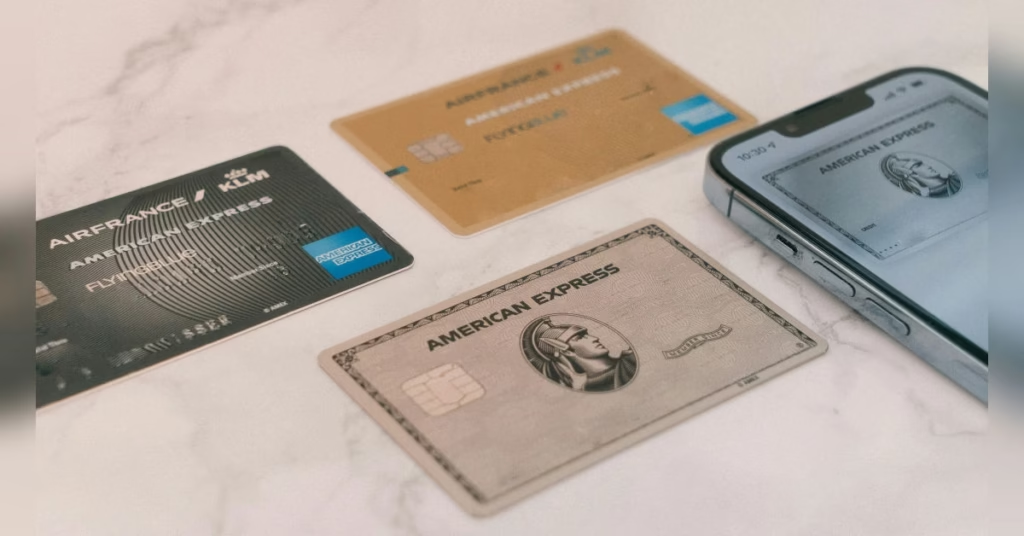
If you’re planning to get a credit card in 2026, your monthly income plays a big role in approval. While there’s no fixed rule for everyone, most banks in the USA want to see that you earn at least $1,000 to $1,500 per month for basic cards. This shows that you can handle small credit limits responsibly.
For standard or mid-tier credit cards, a monthly income between $3,000 and $5,000 gives you a much better chance of approval. That equals about $36,000 to $60,000 per year, which is close to the average income range most banks consider stable for regular credit card users.
If you’re applying for premium or rewards cards, the preferred monthly income is around $6,000 or more. These cards often come with higher limits, travel benefits, and cashback offers, so banks look for higher income to ensure you can manage bigger balances.
However, remember that income is just one part of your application. Even if your income is lower, you can still qualify if you have a good credit score, low debt-to-income ratio, and a steady source of earnings such as a job, business, or side income.
So, to summarize simply:
- Basic credit cards: $1,000–$1,500/month
- Standard cards: $3,000–$5,000/month
- Premium cards: $6,000+/month
These numbers are not official rules but realistic targets for 2026 based on credit market trends in the USA.
In 2026, you typically need a monthly income between $1,000 and $3,000 to qualify for most standard credit cards in the USA.

Secured or student cards can approve applicants earning as low as $800/month.

Rewards or travel cards usually need $3,500+ per month.

Premium cards like Amex Platinum may require $6,000 or more monthly income plus an excellent credit score.
How Income Affects Credit Card Approval in the USA 2026
Your monthly income is one of the first things banks look at when you apply for a credit card. It helps them understand whether you can repay your bills on time and how much credit limit you can safely handle. But income alone doesn’t decide everything — lenders consider your overall financial profile.
Here are the main points that affect approval:
1. Debt-to-Income Ratio (DTI)
Banks don’t just check your income; they compare it with your monthly debts like rent, loans, or car payments. If your DTI is too high (usually above 40%), it signals that most of your income already goes toward other payments. A low DTI below 30% increases your approval chances.
2. Credit Score and History
Even with a good income, a poor credit score can block approval. In 2026, most banks prefer a credit score of 670 or higher for standard cards. Premium cards often require 700+. Your payment history, credit utilization, and age of accounts all impact your score.
3. Type of Income
Lenders accept income from various sources — salary, business earnings, freelance work, or even passive income like rent or investments. The key is consistency. If your income is steady and can be proven with documents, it strengthens your application.
4. Employment Stability
If you’ve been with your employer for at least six months or more, it shows financial stability. Frequent job changes may raise concerns for some lenders.
5. Credit Utilization Ratio
Even if your income is high, using too much of your available credit can lower your chances. Experts recommend keeping your credit usage below 30% of your total limit.
6. Existing Debts and Loans
Before approving a card, banks also review your existing debts — student loans, auto loans, or personal loans. The fewer active debts you have, the more likely you’ll get approved.
7. Type of Credit Card You Apply For
Each card category has different requirements. A student or secured card is much easier to get than a luxury or travel card. Choose a card that matches your income level and credit profile.
So while income is important, what truly matters is the balance between earnings, credit behavior, and debt levels. Even someone with a moderate income but excellent credit habits can get approved more easily than someone earning more but managing credit poorly.
Types of Credit Cards and Ideal Monthly Income in the USA 2026
Not all credit cards are the same — each category targets different income levels and user profiles. Knowing which card fits your income helps you apply smartly and increases your approval chances.
Here’s a breakdown of major card types and the recommended monthly income range for each:
1. Student Credit Cards
- Ideal Monthly Income: $800–$1,500
- These cards are made for students or first-time users with little credit history.
- You don’t need a full-time job; part-time income, internships, or parental support can qualify.
- Examples include Discover it Student Cash Back and Capital One SavorOne Student Card.
2. Secured Credit Cards
- Ideal Monthly Income: $1,000–$2,000
- These cards require a small refundable deposit (usually $200–$500) as security.
- Perfect for people with no credit or those rebuilding credit.
- The income requirement is low since your deposit covers the lender’s risk.
3. Basic or Entry-Level Unsecured Cards
- Ideal Monthly Income: $2,000–$3,500
- These cards don’t need a deposit and offer low credit limits ($500–$2,000).
- If you pay bills on time and keep utilization low, you can easily upgrade later.
- Example: Capital One Platinum Credit Card or Citi Simplicity Card.
4. Mid-Tier Rewards or Cashback Cards
- Ideal Monthly Income: $3,500–$5,000
- These cards give you cashback, points, or travel rewards.
- Lenders prefer moderate to high income and a credit score above 670.
- Examples: Chase Freedom Unlimited, American Express Blue Cash Everyday.
5. Premium Travel and Lifestyle Cards
- Ideal Monthly Income: $6,000–$10,000+
- These are for people with strong income and excellent credit scores.
- They come with perks like airport lounge access, high rewards, and travel insurance.
- Examples: Chase Sapphire Reserve, Amex Platinum Card.
6. Business Credit Cards
- Ideal Monthly Income: Varies ($5,000–$20,000+)
- For freelancers, business owners, or entrepreneurs with verifiable income.
- Lenders review both personal and business income or revenue.
- Examples: Ink Business Preferred (Chase), Amex Business Gold.
7. Store and Retail Credit Cards
- Ideal Monthly Income: $1,000–$3,000
- Easier to qualify for but limited to specific stores.
- Great for building early credit history with consistent payments.
Each type has its own approval rules, but your income stability and credit score always play the biggest role. Applying for the right card based on your earnings can save time and improve approval odds.
How to Get Approved for a Credit Card with Low Income in the USA 2026

Having a low income doesn’t mean you can’t qualify for a credit card. In 2026, banks and credit unions offer several flexible options designed for people who are new to credit or have modest earnings. The key is to apply strategically and show that you can handle credit responsibly.
Here are the best ways to improve your approval chances:
1. Start with a Secured Credit Card
If your monthly income is below $1,500, secured cards are your best choice. You pay a small deposit that becomes your credit limit. It’s low risk for the bank and helps you build a positive payment history fast.
2. Include All Sources of Income
Many people forget that you can list more than just your job salary. Include freelance work, part-time earnings, investments, or financial support from family — all of these count as income for card applications.
3. Keep Existing Debt Low
Before applying, pay off any personal or small loan balances. A lower debt-to-income ratio shows lenders that your current income can easily handle new credit.
4. Apply for Beginner-Friendly Cards
Some credit cards are built specifically for low-income users or beginners. Examples include the Petal 2 “Cash Back, No Fees” Visa Card and Capital One QuicksilverOne. They’re designed for people who want to build credit with fair income and average credit scores.
5. Add a Co-Signer or Become an Authorized User
If you’re new to credit, ask a trusted family member with good credit to add you as an authorized user. You’ll benefit from their credit history, which can improve your chances when you apply for your own card later.
6. Improve Your Credit Score Before Applying
Even with limited income, a high credit score can make a big difference. Pay bills on time, avoid applying for too many loans, and keep old accounts open. A score above 670 already gives you a strong chance for approval.
7. Use Prequalification Tools
Many banks let you check if you’re pre-qualified for a credit card without affecting your credit score. Use this tool to see your approval odds before applying.
8. Build a Consistent Income Record
Even if your income isn’t high, consistency matters more than numbers. Lenders trust steady income over time rather than big jumps or unstable months.
9. Avoid Applying for Too Many Cards at Once
Each hard inquiry slightly lowers your credit score. Applying for one or two cards at a time is safer and shows responsible financial behavior.
10. Start Small, Grow Over Time
Once you get approved for a basic or secured card, use it responsibly. After six months of on-time payments, your credit limit can increase, and you’ll become eligible for better cards with higher limits and rewards.
With these smart steps, even someone earning $1,000–$2,000 per month can successfully build credit and qualify for stronger cards in the future. The goal is to show financial discipline, consistency, and low risk to lenders.
Part 5: Ideal Monthly Income vs. Credit Card Type in the USA 2026
To make it easier to understand what kind of income suits each credit card level, here’s a simple comparison chart based on 2026 financial insights and data from major U.S. card issuers.
| Credit Card Type | Ideal Monthly Income Range (USD) | Credit Score Required | Best For |
|---|---|---|---|
| Student Credit Card | $800 – $1,500 | 580+ | Beginners or students building credit |
| Secured Credit Card | $1,000 – $2,000 | 580+ | Rebuilding or new credit users |
| Basic Unsecured Card | $2,000 – $3,500 | 650+ | First-time users with stable income |
| Cashback or Rewards Card | $3,500 – $5,000 | 670+ | Everyday users who spend regularly |
| Travel Credit Card | $5,000 – $7,000 | 700+ | Frequent travelers and professionals |
| Premium or Luxury Card | $6,000 – $10,000+ | 720+ | High-income users with strong credit |
| Business Credit Card | $5,000 – $20,000+ | 680+ | Entrepreneurs and freelancers |
These ranges are realistic targets rather than fixed requirements. Different banks have their own criteria, and approvals depend on more than just income.
Experian – What Counts as Income on a Credit Card Application

NerdWallet – How Much Income Do You Need for a Credit Card?

Forbes Advisor – Best Credit Cards of 2026

My Fintech Insight – Smart Credit Card Choices in 2026
How Household Income and Shared Earnings Affect Credit Card Approval in 2026
In 2026, credit card companies in the USA have become more flexible about how they calculate your total income. Instead of just looking at your personal salary, many issuers now allow you to include household or shared income — which can significantly boost your approval chances.
Here’s how it works and why it matters:
1. What Counts as Household Income
Household income includes all earnings from people living in your home — such as your spouse, partner, or even family members — as long as you share financial responsibilities. This may include:
- Combined salaries or wages
- Freelance or business income
- Investments or rental income
- Retirement or pension payments
According to Experian, as long as you can reasonably access that shared income to make credit card payments, it’s allowed to be listed on your application.
2. Benefits of Reporting Household Income
When you include shared income, your total reported amount increases — making it easier to qualify for cards with higher limits or better benefits.
For example:
- An individual earning $2,500/month may not qualify for a mid-tier rewards card.
- But if they include a spouse’s $3,000/month income, the total of $5,500/month looks stronger to the lender.
3. Helps Stay Within Debt-to-Income Limits
Household income reduces your overall debt-to-income ratio (DTI). If your monthly debt is $1,500 and you earn $5,000 combined, your DTI is only 30% — which most banks consider safe.
4. Who Can Include Shared Income
The Consumer Financial Protection Bureau (CFPB) allows individuals 21 and older to include income from others if they have reasonable access to it. This rule helps stay-at-home spouses or part-time workers apply for credit cards independently.
5. Be Honest When Reporting Income
Always list realistic income figures. Lenders may verify your income through pay slips, tax forms, or bank statements. Misreporting can lead to rejection or even legal trouble.
6. Example of Household Income Use
Let’s say you’re a freelancer making $2,000 per month, and your partner earns $4,000. You can report the combined $6,000 income, making you eligible for mid-tier or even premium cards such as the Chase Sapphire Preferred or Amex Blue Cash Preferred.
Including household income gives you more flexibility, but it’s equally important to manage spending wisely, as credit cards reflect both your financial responsibility and shared accountability.
For more details, you can check:
How Much Credit Limit You Can Expect Based on Income in the USA 2026
Your monthly income plays a big role in determining your credit limit — the maximum amount you can spend on your card. Banks use your income, spending habits, and credit score to decide how much risk they can safely take when lending to you.
Here’s what you can realistically expect in 2026 based on your income level:
1. Income Below $1,500/Month (Entry Level)
- Expected credit limit: $300 – $1,000
- Ideal for student or secured credit cards
- Examples: Discover it Secured Card, Capital One Platinum Secured
- These cards are great for building credit with responsible payments
2. Income Between $2,000 – $3,500/Month (Basic Cards)
- Expected credit limit: $1,000 – $3,000
- Good for entry-level unsecured cards
- Example: Citi Simplicity Card, Capital One QuicksilverOne
- Banks may automatically increase your limit after six months of on-time payments
3. Income Between $4,000 – $5,000/Month (Mid-Tier Cards)
- Expected credit limit: $3,000 – $7,000
- You can qualify for rewards and cashback cards like Chase Freedom Unlimited or Amex Blue Cash Everyday
- These cards usually offer higher cashback percentages and introductory bonuses
4. Income Between $6,000 – $10,000/Month (Premium Cards)
- Expected credit limit: $10,000 – $25,000+
- Cards in this range include Chase Sapphire Preferred, Amex Gold, or Citi Premier
- Lenders prefer users with strong credit scores and steady income
5. Income Above $10,000/Month (Luxury or Elite Cards)
- Expected credit limit: $25,000 – $100,000+
- High-end cards like Amex Platinum or Chase Sapphire Reserve often offer flexible limits
- These cards come with luxury perks such as airport lounges, concierge services, and higher rewards
What Else Affects Credit Limits:
- Credit score: A higher score often gives you a higher limit
- Payment history: Paying early and consistently leads to limit increases
- Credit utilization ratio: Keeping your spending below 30% of your limit signals financial responsibility
- Length of credit history: The longer your active accounts, the more banks trust you
NerdWallet – How to Increase Your Credit Limit
My Fintech Insight- How to Improve Your Credit Score Quickly
Your income doesn’t just decide if you’ll get a credit card — it influences how much financial freedom you’ll have once approved. Managing that limit responsibly builds your credit score, boosts trust with banks, and opens the door to premium rewards cards in the future
How to Use Your Income Wisely to Maintain a Healthy Credit Score in 2026
Getting approved for a credit card is only the beginning — how you use it determines your long-term financial health. In 2026, banks and credit bureaus focus more than ever on responsible credit usage, payment behavior, and income management when calculating your creditworthiness.
Here are smart ways to use your income effectively while protecting your credit score:
1. Keep Credit Utilization Under 30%
The golden rule is to use less than 30% of your total available credit. For example, if your credit limit is $3,000, try to keep your balance below $900. This shows lenders that you’re not over-reliant on credit.
Learn more from Experian – How Credit Utilization Affects Your Score.
2. Pay Your Balance in Full Each Month
Paying the full amount due — not just the minimum — helps you avoid high interest and keeps your score growing. It also saves you hundreds of dollars annually in finance charges.
3. Set Up Auto Payments or Reminders
Missed payments can drop your score by 100+ points. Setting up automatic payments ensures you never forget due dates, even during busy months.
4. Avoid Applying for Too Many Cards
Each application adds a “hard inquiry” to your credit report. Too many inquiries in a short period can make you look risky. Apply only for cards that match your income and credit level.
5. Build an Emergency Fund
Set aside at least one month of your income in savings. This prevents you from depending too much on credit cards during emergencies or income delays.
6. Match Spending to Income Flow
If your income varies monthly (like freelancing or commissions), plan expenses accordingly. Keep big purchases for higher-income months and pay off balances quickly afterward.
7. Review Statements Regularly
Always check your monthly statement for errors, unauthorized charges, or hidden fees. Disputing them early can protect your score and prevent financial loss.
8. Ask for Credit Limit Increases Strategically
Once you’ve built a six-month history of on-time payments, ask your bank for a limit increase. This improves your utilization ratio without increasing spending.
9. Use Rewards Wisely
If your card offers cashback or travel rewards, use them smartly — for savings, investments, or paying down balances, not unnecessary shopping.
10. Track Your Credit Score
Use free tools to monitor changes in your score every month. Many banks offer this directly in their apps.
You can check credit score tracking tips from Forbes Advisor – How to Improve Your Credit Score.
My Fintech Insight - Improve Your Credit Score in Just Simple Steps
Common Mistakes to Avoid When Applying for a Credit Card Based on Income in 2026
Even if you earn enough to qualify for most credit cards, many people still face rejection or financial stress because of small but costly mistakes. Understanding these can help you use your income more effectively and keep your credit record clean in 2026.
1. Lying About Your Income
Some applicants overstate their income to get a higher credit limit. This is a major red flag for banks. Lenders verify your income through tax records, pay slips, or bank statements. Providing false information can lead to immediate rejection or even legal trouble.
2. Ignoring the Debt-to-Income Ratio (DTI)
Your income isn’t the only thing lenders care about — they also check how much of it goes toward debt payments. Keep your DTI below 35%. You can learn more about calculating and improving it on Investopedia – Debt-to-Income Ratio Guide.
3. Applying for Too Many Cards in a Short Time
Each new application adds a hard inquiry to your credit report, lowering your score temporarily. Apply for one card at a time and wait a few months before the next application.
4. Not Checking the Annual Fee and APR
A high-income card with great rewards might not be worth it if the annual fee or interest rate eats into your budget. Always compare fees and benefits before applying. Websites like NerdWallet Credit Card Comparison can help you decide wisely.
5. Using the Wrong Type of Card for Your Income Level
If your income is modest, start with a student or low-limit card. Jumping straight to a premium card might cause rejections or overspending. Once your income and score improve, you can easily upgrade.
6. Ignoring the Fine Print
Many users miss important terms like minimum balance, hidden fees, or late payment charges. Always read the card’s terms and conditions carefully before signing up.
7. Not Linking Credit Card Payments to Stable Income Sources
Set automatic payments from your main income account so you never miss due dates. Late payments can ruin your score even if your income is high.
8. Falling for Bonus Traps
Some banks offer sign-up bonuses that require high spending within 3 months. Don’t overspend just to earn rewards — it defeats the purpose of good income management.
9. Neglecting Credit Monitoring
A sudden score drop could mean identity theft or reporting errors. Regularly check your credit report on AnnualCreditReport.com — the official site for free credit reports in the USA.
10. Mixing Personal and Business Credit
If you’re self-employed, keep personal and business credit cards separate. This helps track spending clearly and maintain better control of your income.
Avoiding these mistakes ensures that your income is used to build financial strength — not extra debt. Smart, responsible credit use helps you qualify for better cards and lower interest rates in the future.
How Much Income You Need for Different Types of Credit Cards in the USA (2026 Guide)
Not all credit cards require the same income. Banks and financial institutions look at your annual and monthly earnings, debt-to-income ratio, and credit score before approval. Below is a simple 2026 guide showing how much income you typically need for each card type — from starter to premium level.
1. Secured Credit Cards – $0 to $1,500 Monthly Income
If you’re a beginner, student, or have no credit history, secured cards are the best way to start. These cards require a refundable deposit, which becomes your credit limit.
Example: Capital One Platinum Secured Card – income proof isn’t strictly required if you can make the deposit.
✅ Learn more: Capital One Secured Credit Card Details
2. Student Credit Cards – $800 to $2,000 Monthly Income
Students can qualify with a part-time job or regular allowance. Banks may also consider your parents’ or guardian’s support as income.
Example: Discover it® Student Cash Back – requires stable monthly income or proof of funds for repayment.
✅ Read: Discover Student Credit Cards
3. Basic Unsecured Credit Cards – $2,000 to $3,500 Monthly Income
If you have steady employment, you can qualify for standard cards like Chase Freedom Flex or Citi Simplicity. These offer cashback and low intro APRs.
✅ Check details: Citi Simplicity Credit Card
4. Rewards or Travel Credit Cards – $3,500 to $6,000 Monthly Income
These cards are ideal for middle to upper-income users who spend more and can manage repayments easily. They offer points, miles, and cashback on travel or shopping.
Example: American Express Blue Cash Preferred® Card or Chase Sapphire Preferred®.
✅ Learn more: Chase Sapphire Preferred
5. Premium Credit Cards – $6,000+ Monthly Income (Approx. $75,000/Year)
These are luxury cards with top-tier benefits like lounge access, hotel upgrades, and higher cashback limits. Approval requires excellent credit and high verifiable income.
Example: American Express Platinum Card® or Chase Sapphire Reserve®.
✅ Explore: The Platinum Card® from American Express
6. Business Credit Cards – $4,000+ Monthly Business Income
If you’re self-employed or own a small business, your business revenue counts as income. These cards help manage expenses and build business credit.
Example: Ink Business Preferred® Credit Card by Chase.
✅ Read more: Chase Business Credit Cards
7. Co-Branded Store Credit Cards – $1,500 to $3,000 Monthly Income
Retail or brand-based cards (like Amazon, Walmart, or Apple Card) require moderate income and are easy to qualify for if you shop regularly.
✅ Example: Apple Card Requirements
Quick Tip:
If your income is slightly below these limits, you can still qualify by showing low debt, steady cash flow, or a co-signer with good credit.
✅ FAQs and Answers
1. Can I get a credit card with a $4,000 salary?
Yes. With a $4,000 monthly salary, you can easily qualify for most standard and even some rewards credit cards in the USA. Lenders mainly check your credit score and debt ratio along with income.
2. How much must I earn to qualify for a credit card?
You generally need at least $1,000 to $2,000 per month in income to qualify for basic or secured credit cards in 2026.
3. Can I get a credit card with a $5,000 salary?
Absolutely. With $5,000 monthly income, you qualify for mid to premium-level cards such as travel or cashback credit cards with higher limits.
4. What is the credit card limit for $70,000 salary?
A person earning $70,000 annually can expect credit limits between $10,000 and $25,000, depending on credit history and utilization habits.
5. What is a good annual income for a credit card?
A good annual income for most credit cards in the USA is around $20,000 to $30,000. Premium cards may require $60,000 or more.
6. What is a good annual income for a credit card Reddit?
According to Reddit discussions, most users report approval with incomes starting around $25,000–$35,000, provided credit scores are fair to good.
7. Total monthly income for credit card
Your total monthly income includes your salary, freelance earnings, benefits, and other regular income sources before taxes.
8. Total annual income for credit card gross or net
When applying for a credit card, you should enter your gross annual income — that’s before taxes and deductions.
9. What is the minimum income needed for a credit card?
The minimum income for most secured or student credit cards is around $800 to $1,000 per month.
10. What to put for income on credit card application student
Students can include income from part-time jobs, stipends, or regular parental support when applying.
11. What to put for total annual income on credit card application
List your gross annual income, including your salary and other steady income sources.
12. What is a good annual income for a single person?
In the USA, a good annual income for one person is about $40,000 to $60,000, which supports most basic and mid-tier credit cards.
13. When applying for a credit card, do I use gross or net income?
Always use your gross income — your total earnings before taxes and deductions.
14. Does annual income mean gross or net?
“Annual income” on applications means gross income, not take-home pay.
15. What should I put for total annual income?
Include all your earnings from your job, business, or any regular payments before taxes.
16. Total annual income for credit card gross or net Reddit
Reddit users confirm that most issuers ask for gross income, not net income, during credit card applications.
17. What to put for total annual income on credit card application
Use your gross annual income, including all sources like wages, freelance, or investment income.
18. What is a good annual income for a credit card
A steady income above $25,000 per year is enough for most entry-level and mid-tier credit cards.
19. Annual income calculator
You can calculate it by multiplying your monthly income by 12. Example: $3,000 × 12 = $36,000 annual income.
20. What is a good monthly income for a credit card?
A good monthly income is around $2,000–$3,000 to qualify for most standard credit cards in 2026.
21. Total annual income for credit card before or after taxes
Always list your income before taxes (gross) on the credit card application.
22. What to put for income on credit card application student
Students can include income from internships, side jobs, or parental support.
23. Is total annual income gross or net?
It’s gross income — your full yearly earnings before deductions.

Harsh Muchhal is a Software Engineer and Financial Analyst passionate about helping people understand the world of finance and technology in simple, practical ways. With experience in both software development and financial analysis, he blends technical knowledge with real-life money insights to make complex topics easy for everyone. Harsh shares valuable guides, tips, and updates on personal finance, investing, credit cards, and the latest tech innovations — helping readers make smarter choices in today’s fast-changing digital world.