
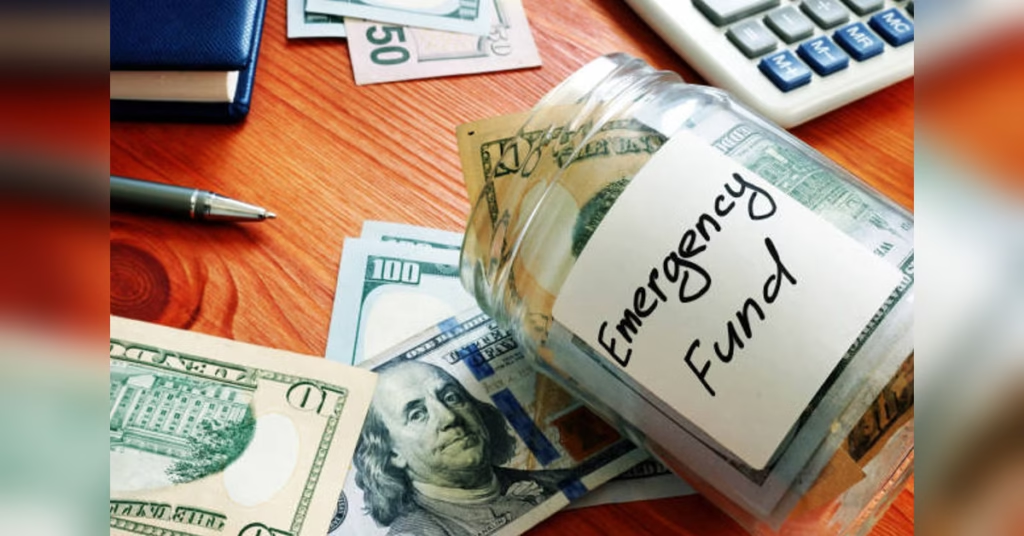
Having an emergency fund is one of the most important parts of financial security. It helps you stay safe when something unexpected happens, like losing a job, getting sick, or facing sudden expenses. But many people make mistakes with their emergency funds without even knowing it. These mistakes can make the fund less useful when it is needed the most. In this blog, we will talk about the top five mistakes people make with their emergency funds and how you can avoid them.
What Is an Emergency Fund?
An emergency fund is a small savings account that helps you in times of need. It is money kept aside for sudden problems, not for normal spending. For example, if your car breaks down or you have a medical emergency, you can use this money instead of taking a loan or using a credit card. Most financial experts say you should save at least three to six months’ worth of living expenses in your emergency fund. This means if you spend $2,000 a month, your emergency fund should have between $6,000 and $12,000.
Table of Contents
Table of Contents
Why an Emergency Fund Is Important
Having an emergency fund gives you peace of mind. You do not have to worry when something bad happens because you already have money ready. It also helps you avoid debt. Many people use credit cards when they face a problem, but this can lead to more stress later because of high interest. An emergency fund helps you stay independent and safe during hard times.
How Americans Are Managing High Rent and Inflation in 2025 Without Going Broke
Mistake 1: Not Having an Emergency Fund at All
The first and biggest mistake is not having any emergency fund. Many people think they do not need one or that they can manage with credit cards or loans. But emergencies can come anytime. If you lose your job or have a big medical bill, borrowing money can make the problem worse. Without savings, people often end up paying extra in interest or falling into debt. The best time to start saving is now, even if it’s a small amount. Start with a goal of $500, then slowly grow it each month. Every little bit helps, and small steps lead to big results over time.
Top Ways Millennials and Gen Z Are Saving Money in 2025 Without Cutting Lifestyle
Mistake 2: Keeping the Money in the Wrong Place
Some people keep their emergency funds in risky investments like stocks or mutual funds. This is a big mistake. The main goal of an emergency fund is safety and easy access, not high returns. You should be able to use the money quickly when you need it. Stocks can go up and down, so your money might lose value when you need it most. A better idea is to keep it in a savings account, money market account, or high-yield savings account. These accounts give you some interest but still keep your money safe and easy to use.
Another mistake is keeping the money in cash at home. While it may seem safe, cash can be lost, stolen, or damaged. Also, it is not earning any interest. So, keeping your emergency fund in a safe and accessible bank account is the best choice.
Difference Between Secured and Unsecured Credit Cards
Mistake 3: Using the Emergency Fund for Non-Emergencies
Many people start using their emergency fund for things that are not real emergencies. For example, buying a new phone, going on vacation, or shopping during a sale. These are not emergencies. Once you start using your emergency fund for small things, it becomes very hard to rebuild it. The main rule is simple — only use it when you really need it. A true emergency is something that affects your basic needs like food, health, housing, or transportation. If it doesn’t affect these areas, it’s not an emergency.
It’s also a good idea to have a separate savings account for fun or personal goals. That way, you won’t feel tempted to touch your emergency money.
Mistake 4: Not Saving Enough in the Emergency Fund
Another common mistake is not saving enough money in your emergency fund. Many people think that saving a few hundred dollars is enough, but in reality, that amount might not last even one month if something serious happens. For example, if you lose your job, it might take a few months to find another one. During that time, you still need to pay for rent, food, bills, and other expenses.
Financial experts usually suggest saving at least three to six months of living expenses. This means you should calculate how much you spend each month on basic needs such as rent, groceries, and utilities, and then multiply that by three or six. If you spend $2,000 a month, try to save at least $6,000 to $12,000. If you have a family, unstable job, or own a small business, you might want to save even more.
If you cannot save that much right now, don’t worry. Start small. Save a little every week or month, and keep adding to your fund regularly. The key is to stay consistent. Over time, your savings will grow, and you’ll feel much safer knowing you have money ready for hard times.
What Is Compound Interest and How It Builds Wealth | 2025 Guide
Mistake 5: Forgetting to Refill or Update the Fund
Many people make the mistake of using their emergency fund once and then not filling it back. Life is full of surprises, so it’s always possible that you’ll face more than one emergency. If you use your emergency fund for a car repair or medical bill, make sure to start saving again as soon as possible. Treat it like paying a bill to yourself. Even if you add small amounts every month, it will help rebuild your fund slowly.
Another important point is to update your emergency fund from time to time. Your expenses may increase with time due to inflation, higher rent, or family needs. What was enough two years ago might not be enough today. Review your budget once a year and adjust your fund size accordingly. This will make sure you always have the right amount saved for your current lifestyle.
Emergency Funds: Why You Need One and How to Build It
How to Avoid These Mistakes
To build a strong emergency fund, follow these simple tips:
- Start small: Even saving $10 or $20 a week is a good beginning.
- Make it automatic: Set up automatic transfers from your checking account to your emergency fund every month.
- Keep it separate: Do not mix your emergency fund with your regular savings.
- Do not touch it: Use it only for real emergencies, not for shopping or travel.
- Check it yearly: Review your savings and update the amount if your expenses have increased.
Building a solid emergency fund takes time, patience, and discipline, but the peace of mind it gives is worth every effort. When you know you are financially ready for sudden problems, you feel less stress and more confident about your future.
Expert Tips to Build a Strong Emergency Fund
Building an emergency fund may sound hard at first, but with small and steady steps, anyone can do it. Here are some simple expert tips that can make it easier and faster for you to save.
1. Start with short-term goals: Instead of worrying about saving thousands of dollars right away, start small. Your first goal can be $500. Once you reach that, move to $1,000, then keep going until you have three to six months of expenses saved. This step-by-step goal makes saving easier and keeps you motivated.
2. Cut small expenses: You don’t have to make big lifestyle changes to save money. Try cutting small daily expenses like eating out often, unused subscriptions, or buying coffee outside every day. Even saving $3 to $5 a day can help you save over $100 a month. That small change adds up quickly in your emergency fund.
3. Use extra money wisely: When you get a tax refund, bonus, or any unexpected income, put a part of it into your emergency fund. Most people spend it right away, but saving even half of that money can bring you closer to your goal.
4. Keep your money easy to reach but not too easy: Choose a savings account that allows quick access in case of emergencies but not so easy that you’ll spend it for no reason. A high-yield savings account or money market account is a great choice because you can earn some interest while keeping your money safe.
5. Stay consistent: Saving money is more about habit than amount. Even if you save $10 every week, you’re building discipline. Keep adding money every month no matter what, and never skip unless it’s a real emergency.
What Happens When You Don’t Have an Emergency Fund
When people do not have an emergency fund, they often depend on loans or credit cards. This creates a big problem because loans come with interest, and the debt keeps growing. In the end, you might pay much more than the actual emergency cost. Not having an emergency fund also causes mental stress. You start worrying about money every time something unexpected happens. It can even affect your health and relationships. Having a small savings fund keeps you calm and helps you take better decisions.
How to Choose the Right Bank Account for Your Needs
Conclusion
An emergency fund is not just about money. It is about safety, peace of mind, and freedom from worry. Everyone faces unexpected events in life, and being ready makes those times less painful. The key is to avoid the five common mistakes — not having one, keeping it in the wrong place, using it for non-emergencies, not saving enough, and forgetting to refill it. By avoiding these mistakes and following simple saving habits, you can build a strong emergency fund that supports you whenever life gets tough.
You don’t need to be rich to start. You just need to start today. Every dollar you save makes your future more secure.
Helpful External Links
- Consumer Financial Protection Bureau – Emergency Savings Tips
- Investopedia – How to Build an Emergency Fund
- USA.gov – Manage Your Money
- NerdWallet – Best Places to Keep Your Emergency Fund
- Bankrate – Emergency Fund Calculator
FAQs
Q1. How much should I have in my emergency fund?
Most experts suggest saving at least three to six months of your regular living expenses.
Q2. Where is the best place to keep an emergency fund?
A high-yield savings account or money market account is the safest and most convenient option.
Q3. Can I invest my emergency fund in stocks?
No, you should not invest your emergency fund in stocks or risky options. It should always be safe and easy to access.
Q4. What should I do after I use some of my emergency fund?
Start refilling it as soon as possible. Make it a habit to add small amounts each month until it’s full again.
Q5. Can I use my emergency fund for paying off debt?
Only if it’s a real emergency. Otherwise, keep your emergency fund separate and use extra income to pay off debt.

Harsh Muchhal is a Software Engineer and Financial Analyst passionate about helping people understand the world of finance and technology in simple, practical ways. With experience in both software development and financial analysis, he blends technical knowledge with real-life money insights to make complex topics easy for everyone. Harsh shares valuable guides, tips, and updates on personal finance, investing, credit cards, and the latest tech innovations — helping readers make smarter choices in today’s fast-changing digital world.

Pingback: What is the credit card limit for $70,000 salary? - MY FINTECH INSIGHT
Pingback: What Is the 7-Year Rule on Student Loans in California? - MY FINTECH INSIGHT