
Introduction
White House Freezes $26 Billion in Democratic States Amid 2025 Shutdown Standoff
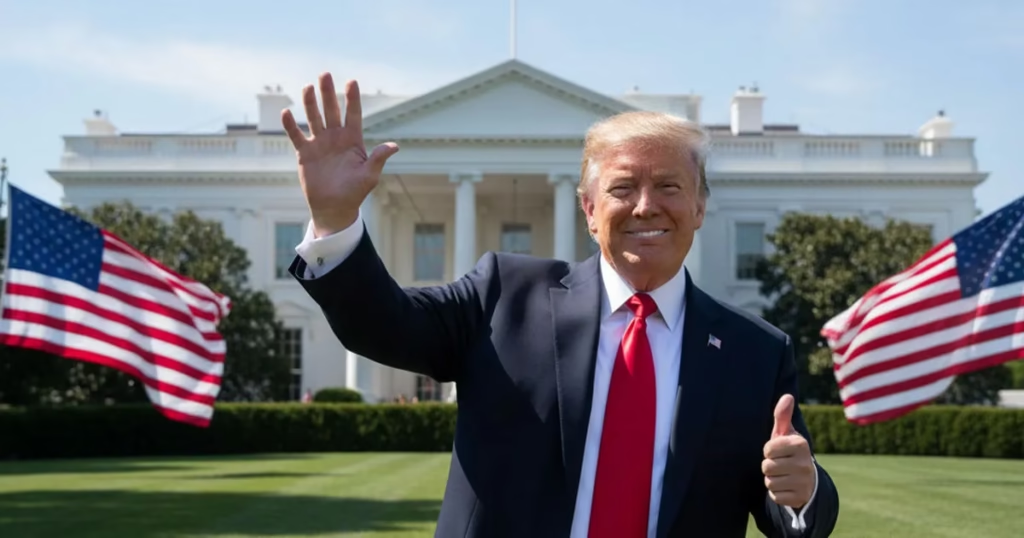
The U.S. government shutdown has escalated into a political firestorm. In a surprise move, the White House froze nearly $26 billion in federal funds, targeting Democratic-led states as part of a broader standoff with Congress.
The freeze affects major infrastructure and climate projects in states like New York, California, Illinois, and others—leaving leaders and residents frustrated. This unprecedented step has intensified partisan tensions while raising questions about the use of federal dollars as political leverage.
Table of Contents
What Happened: The Shutdown & The Freeze
As of October 1, 2025, the federal government officially shut down after Congress failed to agree on a budget. Soon after, the White House announced a pause on $26 billion worth of projects, focusing heavily on Democratic strongholds.
Breakdown of frozen funds:
- $18 billion in infrastructure projects in New York City (including the Hudson Tunnel and Second Avenue Subway expansion).
- $8 billion in green energy and climate funding across 16 Democratic-led states.
This marks one of the most dramatic examples of federal funding being withheld during a shutdown, sparking outrage among Democratic governors and lawmakers.
Related : Top U.S. Banks and Credit Unions Offering the Best Car Loans in 2025
Why New York Is Hit the Hardest
New York City, represented by Senate Majority Leader Chuck Schumer, is bearing the brunt of the freeze.
- The Hudson Tunnel Project—critical to the Northeast rail corridor—is on hold.
- The Second Avenue Subway extension faces indefinite delays.
- Thousands of jobs linked to these projects are now uncertain.
Local officials argue that halting these projects will not only slow economic growth but also harm millions of commuters who rely on reliable public transit.
Related : Best American Express Credit Cards in the USA 2025: Rewards, Travel & Cashback
Political Context: A Shutdown Slap
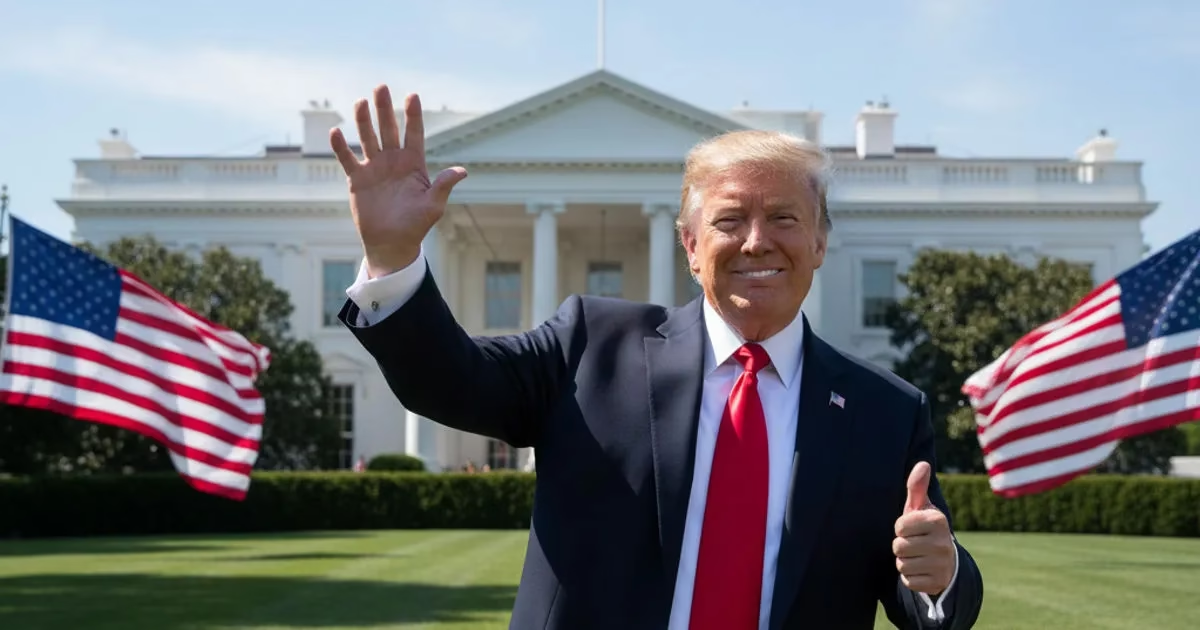
Observers see the funding freeze as more than just a budget move—it’s a political message.
- Critics call it retaliation against Democratic states for opposing the administration’s budget priorities.
- Supporters within the White House argue it is about “fiscal responsibility” and reviewing projects tied to diversity, equity, and inclusion (DEI) spending.
- Legal experts suggest lawsuits could be filed, questioning whether the executive branch has the authority to selectively freeze already-approved funding.
Broader Impact Beyond New York
The freeze extends beyond infrastructure:
- Green Energy Programs: Climate funding across Democratic-led states is now stalled, threatening clean-energy initiatives.
- Job Creation: Many states expected thousands of new jobs from these investments. With the pause, hiring and local economic activity are disrupted.
- Political Fallout: The move sets the stage for a bitter budget battle, with Democrats calling it a “shutdown slap” against ordinary Americans.
What’s Next: Legal Battles & Uncertainty
Democratic governors and lawmakers are preparing to fight back. Lawsuits are expected, challenging whether the administration can legally withhold funding already allocated by Congress.
Meanwhile, businesses, transit agencies, and workers are left in limbo. Until Congress resolves the shutdown—or courts intervene—these projects are stalled.
More From Us : 6 Smart Investments Every Boomer Needs for a Secure Solo Retirement
Summary
The White House’s decision to freeze $26 billion in federal funds during the 2025 government shutdown has triggered one of the most intense political battles in recent years. The freeze, announced shortly after the shutdown began on October 1, 2025, targets major projects in Democratic-led states, including New York, California, and Illinois. Officials describe it as a “temporary pause,” but the political undertones are clear—it’s being seen as a strategic move in a growing standoff between the White House and Congress.
The breakdown of the frozen funds highlights how severe the impact could be. Around $18 billion is tied to infrastructure projects in New York alone, including the Hudson Tunnel Project and the Second Avenue Subway expansion, both vital to the Northeast’s transit system. Another $8 billion in funding is tied to green energy and climate initiatives across 16 Democratic-controlled states. These freezes not only halt development but also threaten thousands of jobs and delay crucial environmental programs.
Political analysts are calling this one of the most aggressive funding freezes in modern U.S. history. Many Democrats argue that it’s a “shutdown slap” meant to pressure opposition leaders like Senate Majority Leader Chuck Schumer, whose home state, New York, is most affected. The White House, however, claims that the move is about “fiscal responsibility”—reviewing projects linked to diversity and climate programs amid budget uncertainty.
Legal experts expect a wave of lawsuits, arguing that the executive branch may have overstepped its authority by freezing already-approved Congressional funds. The outcome of these legal challenges could set a precedent for future budget disputes between the White House and Congress.
The economic consequences are already being felt. Transit agencies, contractors, and clean energy companies are halting operations, while workers face layoffs and uncertainty. Beyond local economies, the freeze risks slowing national recovery efforts and disrupting long-term sustainability projects.
In essence, the 2025 shutdown has evolved beyond a budget impasse—it’s become a political and economic confrontation with real-world consequences. Whether this freeze stands or is overturned by courts will determine how far the federal government can go in leveraging funding during political standoffs. For millions of Americans in affected states, the question isn’t about politics—it’s about when the work, and paychecks, will start again.
Conclusion
The White House freeze on $26 billion for Democratic states during the 2025 shutdown is more than just a budgetary move—it’s a political flashpoint. With infrastructure, climate, and job-creating projects on hold, millions of Americans could feel the impact.
As partisan divisions deepen, the coming weeks will reveal whether the freeze stands, or if courts and Congress push back. For now, the shutdown has become not just a federal crisis, but a direct strike at the states caught in the crossfire.
Check Our Finance Category : FINANCE
FAQs
Q1: How much money did the White House freeze in Democratic states?
About $26 billion, including $18 billion in New York infrastructure and $8 billion in green energy projects across 16 states.
Q2: Why is New York hit hardest by the freeze?
New York hosts major projects like the Hudson Tunnel and Second Avenue Subway extension, both critical to the nation’s busiest transit network.
Q3: Is this freeze legal?
Legal experts say it could face challenges in court, as Congress had already approved the funding. The move may be tested under separation of powers.
Q4: Who will be most affected by the freeze?
Commuters, transit agencies, and clean energy workers in Democratic-led states are most directly impacted.
📌 Authoritative Sources Used (for facts):
- Reuters – US withholds $18B for New York projects
- AP News – Trump admin halts $18B NYC infrastructure funding
- Washington Post – Shutdown halts $18B subway & rail projects
More Category

Harsh Muchhal is a Software Engineer and Financial Analyst passionate about helping people understand the world of finance and technology in simple, practical ways. With experience in both software development and financial analysis, he blends technical knowledge with real-life money insights to make complex topics easy for everyone. Harsh shares valuable guides, tips, and updates on personal finance, investing, credit cards, and the latest tech innovations — helping readers make smarter choices in today’s fast-changing digital world.
Pingback: Elon Musk Hits $500 Billion Net Worth in 2025: A Deep Dive Into His Wealth